
Search Allegheny County Court Records
Allegheny County court records are searched through both state and county systems. The Pennsylvania UJS Case Search is the broad first stop for public docket sheets from Common Pleas and Magisterial District Court cases. It is useful when the party name, case number, offense tracking number, police incident number, or lower-court docket is known. The county Department of Court Records portal adds local access for civil, family, criminal, marriage, e-filing, and retrieval functions, but the civil and family search is more case-ID based than a general name search.
The county also preserves in-person channels. Civil and family records route through the Department of Court Records Civil/Family Division in the City-County Building. Current criminal files and the four prior years are in the Criminal Division at the courthouse, while older criminal files must be ordered from storage. For lower-court matters, the Magisterial District Court directory helps identify the issuing office, and Pittsburgh Municipal Court handles city matters.
- Start with UJS Case Search when searching by name, docket number, OTN, complaint number, or statewide court level.
- Use the Allegheny DCR portal when the civil or family case ID is known, then complete the CAPTCHA shown on the county search page.
- Match the docket to the court division before asking for copies, since civil, criminal, family, and Orphans' Court records are held by different counters.
- For criminal files not found online, visit or call the Criminal Division about the file location, keeping in mind that case details are not discussed by phone.
- Use the county open-records process only for non-court county records. Common Pleas case files go to the court custodian, not the ordinary RTK form.
The county court-records overview is shown on the official Allegheny County Court Records page.
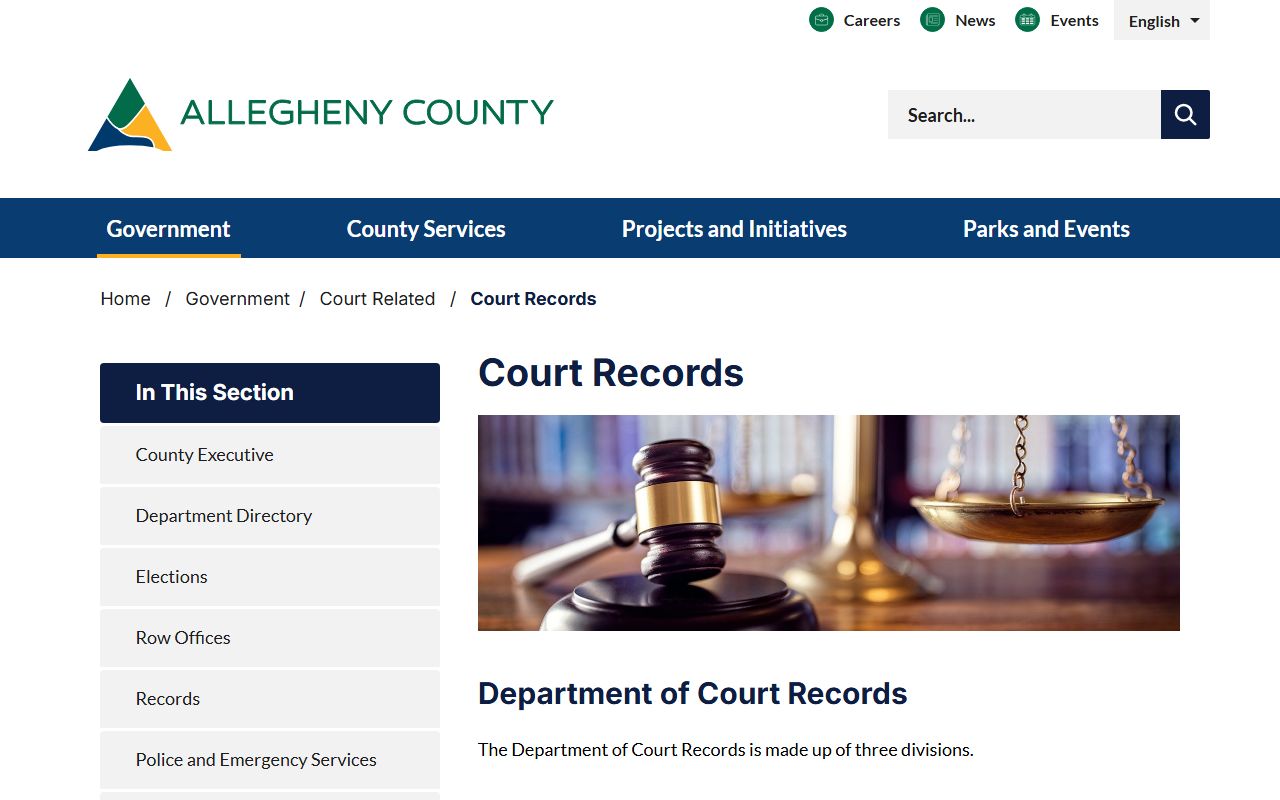
That county page is important because it explains the local Department of Court Records divisions rather than treating all Allegheny County court records as one office.
| Search field | Where it helps | Notes |
|---|---|---|
| Case Number | UJS docket search | Best when an exact docket number is known. |
| Participant Name | UJS docket search and PAeDocket | Useful for criminal, civil, MDJ, and traffic matters. |
| Organization Name | UJS docket search | Useful for business or agency parties. |
| Standard Case ID | DCR Civil/Family case search | County search route for known Allegheny case IDs. |
| Non Standard Case ID | DCR Civil/Family case search | Alternative county identifier accepted by the DCR search page. |
| Security Check | DCR Civil/Family case search | CAPTCHA entry is required before submission. |
Allegheny County Court System
Allegheny County is Pennsylvania's Fifth Judicial District. Its main trial court is the Court of Common Pleas, which has Civil, Criminal, Family, and Orphans' Court divisions. Those divisions hear major civil disputes, criminal prosecutions, divorce, custody, support, protection-from-abuse matters, adoptions, guardianships, trusts, estates, and appeals from some lower courts or agencies. The official division overview lists 43 commissioned judges, with senior judges also assigned among divisions.
Lower-level cases are not all filed at the courthouse. Magisterial District Courts handle many traffic citations, summary offenses, landlord-tenant cases, small civil disputes, preliminary arraignments, and preliminary hearings outside the city. Pittsburgh Municipal Court handles city lower-court matters and also supports 24-hour arraignment and emergency PFA functions. Appeals from the Court of Common Pleas generally go to the Superior Court of Pennsylvania, while some government and state-agency matters route to Commonwealth Court.
The Fifth Judicial District homepage is available through the official Allegheny Courts website.
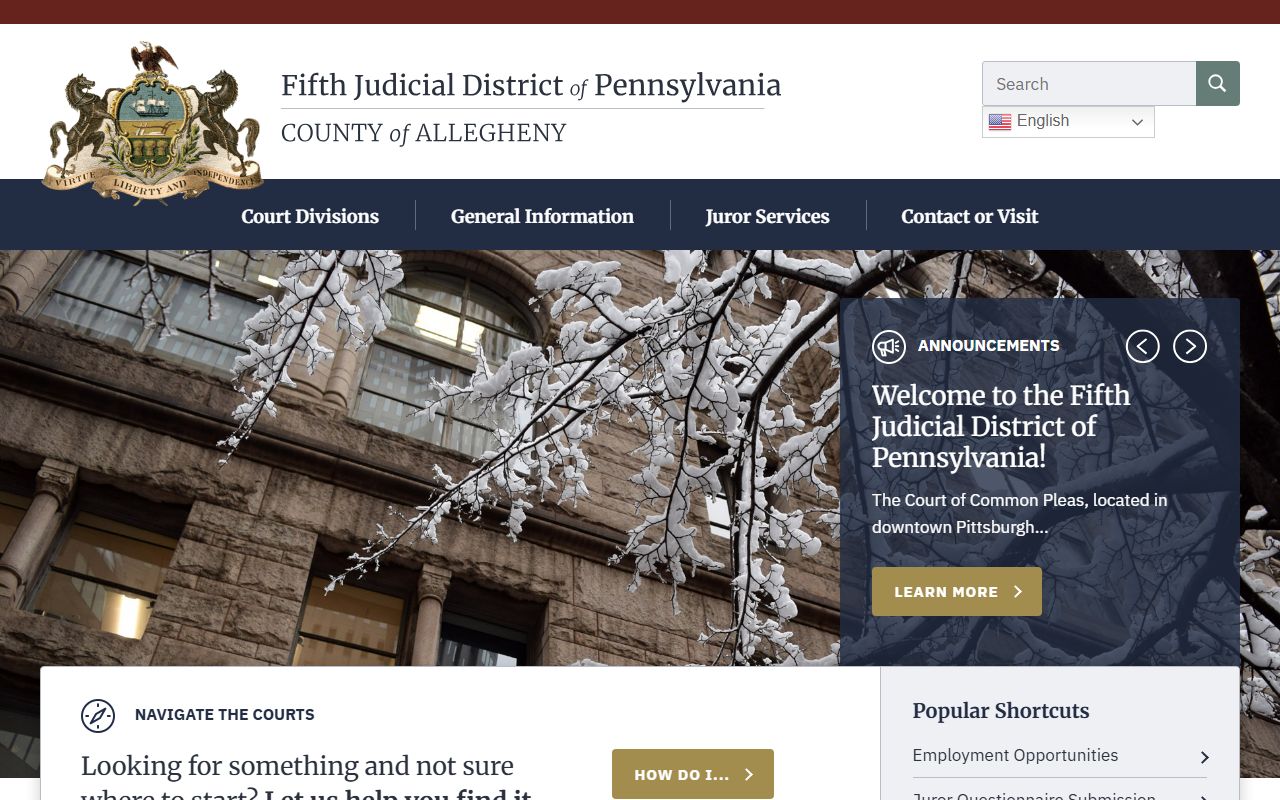
The court site is a useful counterpart to the records portal because it identifies divisions, judges, lower courts, and courthouse services.
| Court or office | Role in Allegheny County | Common records |
|---|---|---|
| Court of Common Pleas | General trial court for the Fifth Judicial District | Civil, criminal, family, Orphans' Court, appeals from lower tribunals |
| Magisterial District Courts | Local minor courts throughout the county | Traffic, summary criminal, landlord-tenant, small civil, preliminary hearings |
| Pittsburgh Municipal Court | Lower court for city matters | City traffic, summary cases, arraignments, emergency PFA access |
| Superior Court and Commonwealth Court | State appellate courts | Appeals from trial-court or government matters |
Case flow: Magisterial District Court or Pittsburgh Municipal Court › Court of Common Pleas › Superior Court or Commonwealth Court › Supreme Court of Pennsylvania.
Where Allegheny County Records Are Kept
The county does not use one all-purpose clerk for every court file. The Department of Court Records Civil/Family Division performs the former Prothonotary functions. It receives civil and family filings, maintains official documents and the seal, and handles filings at the City-County Building. The Criminal Division keeps current criminal files in Room 220 of the courthouse and can order older files from storage. The Wills/Orphans' Court Division handles wills, letters, estate documents, Orphans' Court case files, and marriage records.
The Department of Court Records portal appears on the official Allegheny County DCR landing page.
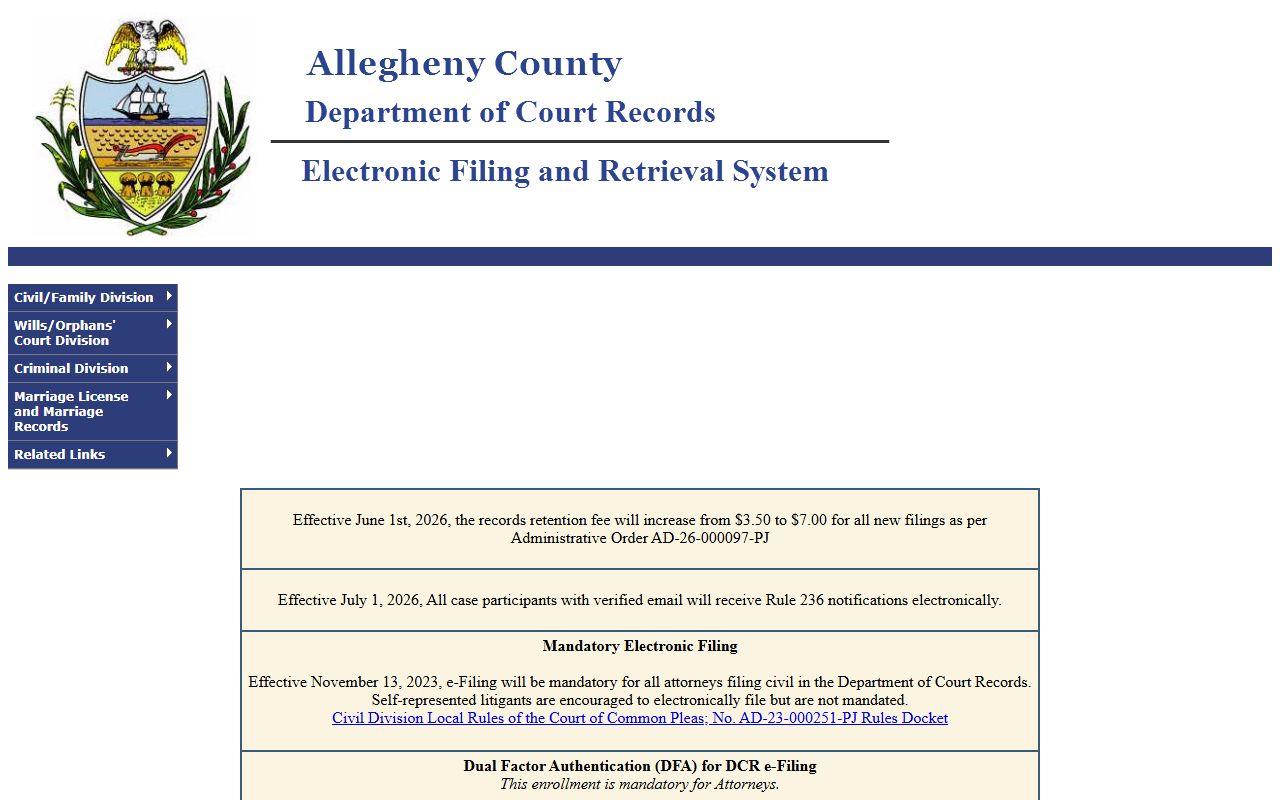
The portal confirms why record access should be sorted by division before a copy request is made.
Civil/Family Division
414 Grant Street, First Floor
Pittsburgh, PA 15219-2469
412-350-5729
Monday-Friday 8:30 a.m.-4:30 p.m.
Criminal Division Files
436 Grant Street, Room 220
Pittsburgh, PA 15219
412-350-5320
Computer terminals are available for criminal record research.
Wills/Orphans' Court Division
436 Grant Street, Room 114
Pittsburgh, PA 15219
412-350-4180
Probate, Orphans' Court, and marriage-record functions.
Allegheny County Court Record Types
Allegheny County court records include more than docket sheets. Civil files can include complaints, motions, arbitration materials, orders, judgments, liens, and name changes. Criminal files may include complaints, informations, OTN data, charges, pleas, verdicts, sentencing orders, probation entries, bail entries, and expungement petitions. Family files can include divorce, custody, support, paternity, and protection-from-abuse records, although child and abuse-victim details may be restricted.
Probate and Orphans' Court records include wills, letters, estate administration, guardianship, trust, adoption, and audit matters. Traffic and summary records often begin in Magisterial District Court or Pittsburgh Municipal Court. Warrant records are more limited: the Sheriff's Warrant Office is the Common Pleas Criminal Division bench-warrant repository, while lower-court warrants may be tied to MDJ or municipal dockets. Sealed, expunged, juvenile, adoption, and some mental-health matters are not public in ordinary searches.
The Common Pleas division overview is available from the Allegheny Courts division page.
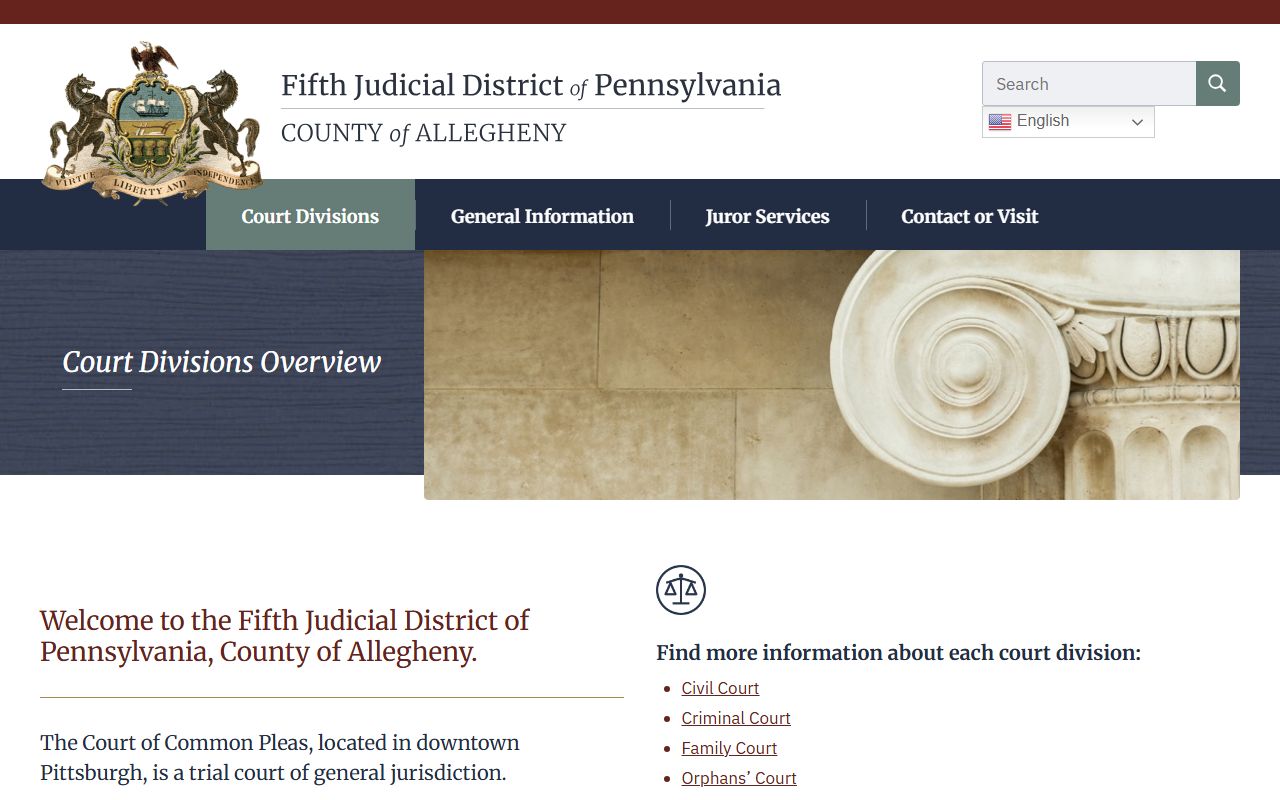
The division page helps connect each Allegheny County court record type to the court branch that creates it.
- Criminal records: Common Pleas criminal case files, charges, pleas, dockets, sentencing entries, and related financial obligations.
- Civil records: Civil disputes, judgments, liens, motions, arbitration records, and lower-tribunal appeals.
- Family records: Divorce, custody, support, paternity, and PFA matters, with confidentiality limits for sensitive details.
- Orphans' Court records: Estates, wills, letters, trusts, guardianships, adoptions, and related account or audit filings.
- Traffic records: Citation dockets, pleas, hearings, dispositions, fines, costs, and PAePay eligibility.
What Allegheny County Court Records Show
A court docket is the chronological case record. It often shows the docket number, court, county, caption, filing date, case status, parties, attorneys, event entries, hearings, orders, dispositions, and financial obligations. Criminal and traffic records add fields such as OTN, complaint number, arresting agency, charge statute, charge grade, bail, plea, sentence, probation, restitution, and costs. Civil and family records may show case type, motions, orders, judgments, conferences, and hearings, while confidential details are redacted or withheld under state policy.
| Field | What it shows |
|---|---|
| Docket or case number | The official court identifier used for search, payment, and copy requests. |
| Caption and parties | The named plaintiff, defendant, petitioner, respondent, agency, or other case participants. |
| Filing and event entries | Pleadings, motions, orders, hearings, continuances, and disposition events in date order. |
| Charges or claims | Criminal statutes, traffic citations, civil claims, or family matter type. |
| Disposition | The final outcome of a charge, claim, motion, or case event. |
| Financial obligations | Costs, fines, restitution, judgment amounts, or balances approved for online payment. |
- Disposition
- The court-record entry that states how a charge, claim, or case issue ended.
- OTN
- An offense tracking number used in Pennsylvania criminal cases.
- Motion
- A party's request for a judge to issue an order.
- Bench warrant
- A warrant issued by a court, often for failure to appear or comply with an order.
Allegheny County Public Access Rules
Pennsylvania separates court case records from ordinary county agency records. The county's own court-record open-records guidance says Court of Common Pleas case files are open unless sealed by court order, and a requester does not need the county Open Records Fill-In Form for those case files. Requests should go to the proper court custodian. For non-court county records, the county Open Records page accepts requests online, by mail, fax, email, or in person under the Pennsylvania Right-to-Know Law.
The official county request channels appear on the Allegheny County Open Records page.
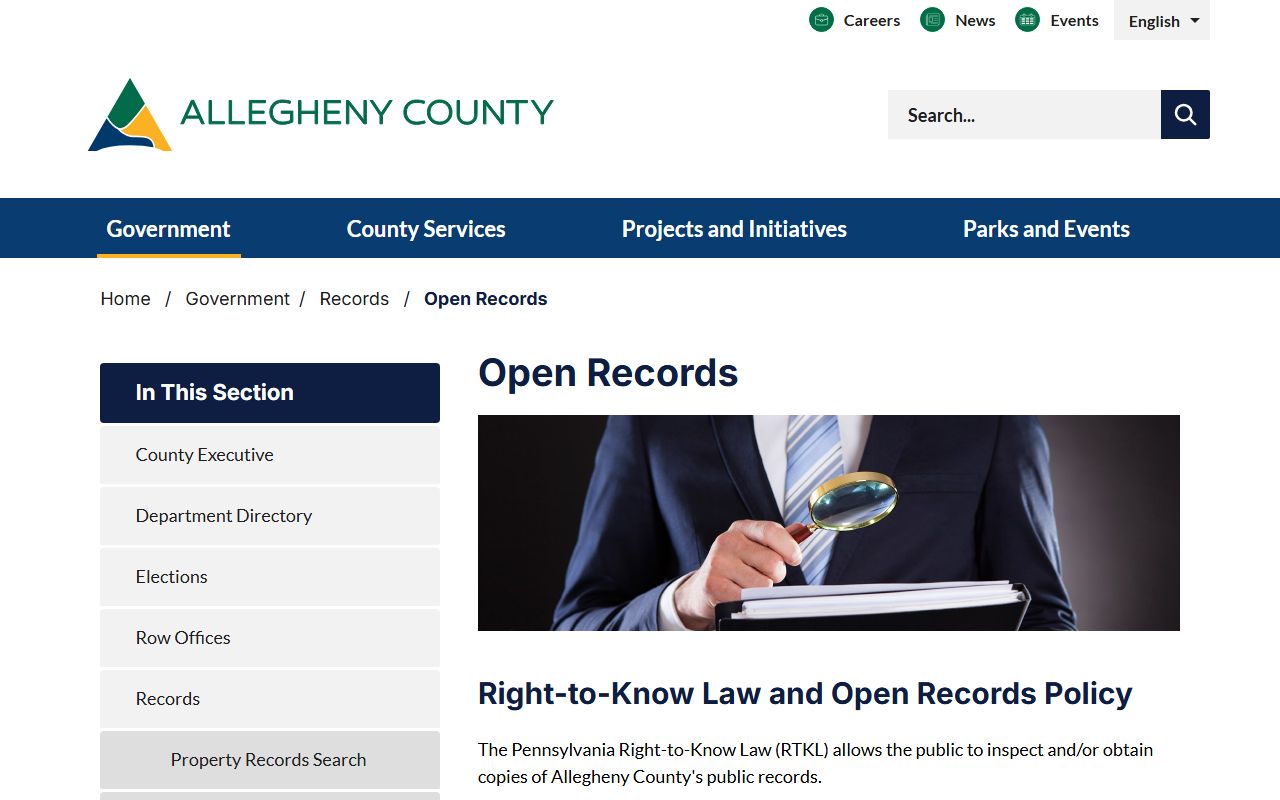
That distinction matters because using the wrong request route can slow a court-record copy request.
Key access rules:
Pennsylvania Right-to-Know Law, 65 P.S. §§ 67.101 et seq. governs agency records, while court case records follow court policy and rules.
UJS Case Records Public Access Policy sets statewide rules for public case-record access and confidential information.
Pennsylvania public records policies explain how judicial records differ from private search products.
18 Pa.C.S. § 9122 controls many adult criminal expungement issues, so a missing public record should not be treated as proof that no case ever existed.
Restricted Allegheny County Court Records
Not every court record is open online or at the counter. Juvenile matters are often restricted, with limited public access only for serious categories defined by law or rule. Adoption records in Orphans' Court are confidential. Mental-health proceedings and incapacitated-person details can also be limited. Expunged and sealed matters are not public through ordinary search tools, and the UJS public-access policy requires confidential information to be handled carefully in both paper and electronic case records.
Allegheny County's older redacted and unredacted filing practice changed when the statewide policy took effect on January 1, 2022. Filers no longer submit two versions of documents that contain confidential information under the old local practice. For criminal expungements, the county notes that some Probation Without Verdict expungements are automatically filed by Adult Probation after successful completion and payment, while ASI program expungements require a motion filed with the Criminal Division and the listed filing fee.
Note: If a file is sealed, the public search result may be incomplete or absent even though a court case existed.
Allegheny County Specialty Courts
Allegheny County Criminal Division operates several problem-solving courts. Research materials identify Domestic Violence Court, DUI Court, Drug Court, Mental Health Court, Sex Offender Court, and Veterans Court. Adult Drug Court is framed as court-monitored treatment for qualified nonviolent people with substance use disorder. Domestic Violence Court focuses on victim and community safety, participant accountability, healthier relationship practices, and reduced recidivism.
These programs affect records because a docket may show specialized proceedings, compliance reviews, treatment conditions, probation terms, or later expungement-related events. The District Attorney materials describe diversionary court programs such as Drug Court, DUI Court, Mental Health Court, and Veterans Court as part of the county's broader criminal-justice work. Eligibility is case specific and should not be assumed from the name of a charge alone.
Allegheny County Inmate and Warrant Records
The Allegheny County Jail is at 950 Second Avenue in Pittsburgh, and the county lists Trevor Wingard as warden. The jail is the local facility for people processed or held by county authorities. Official county pages did not expose a public jail-roster search form in the reviewed materials. Custody information may require jail contact, VINE notifications, court docket review, or a state locator when the person is in Pennsylvania Department of Corrections custody rather than the county jail.
The county jail overview is available through the Allegheny County Jail page.
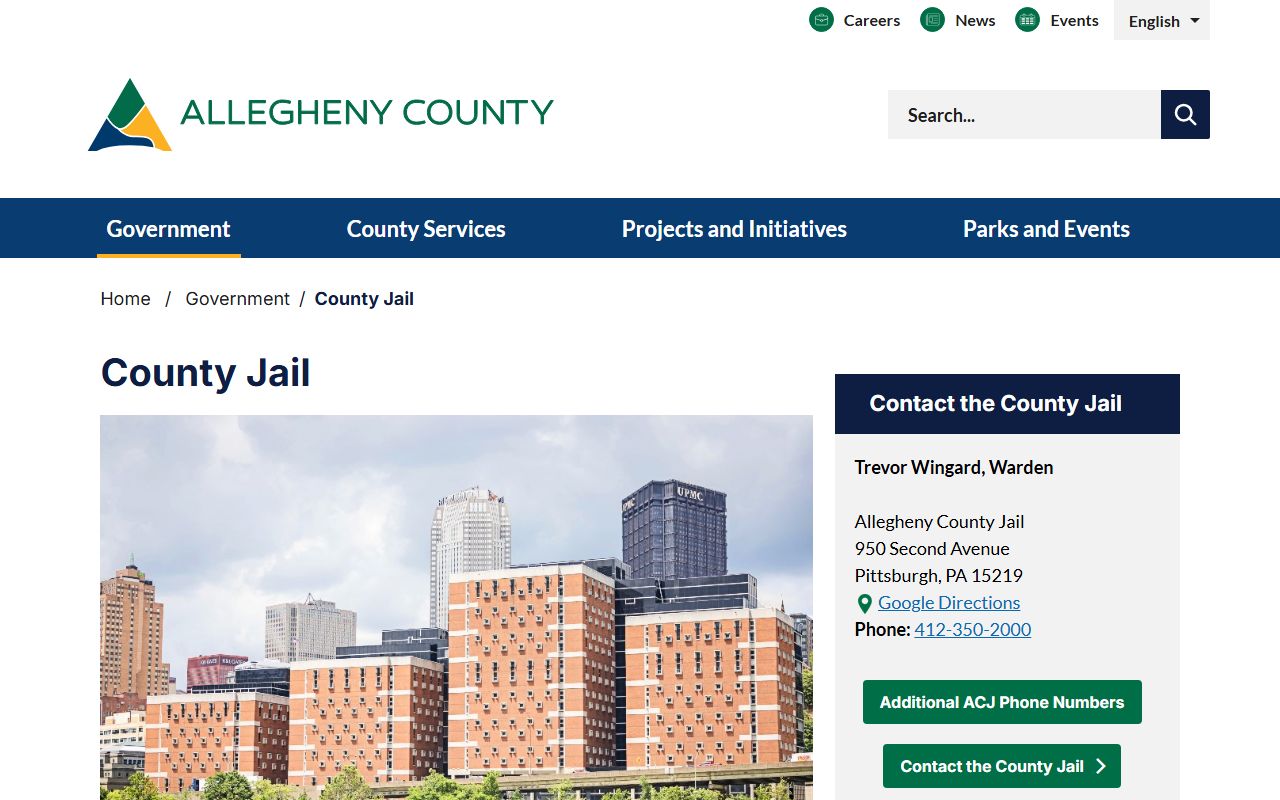
The jail page is the local anchor for inmate funds, mail, tablet visits, commissary, reports, mental-health concern numbers, and jail leadership.
Sheriff Kevin M. Kraus leads the Allegheny County Sheriff's Office. The Sheriff's Warrant Office is the repository for Common Pleas Criminal Division bench warrants, but the public fugitive page is a most-wanted style search, not a complete public warrant clearance system. The Sheriff's public notice says people who believe they have a warrant must appear in person and that warrant information is not given by phone. For custody details, use the full Allegheny County inmate records page; for warrant limits and resolution steps, use warrant records.
Allegheny County Marriage and Orphans' Court
Marriage records in Allegheny County are maintained from 1885 to the present, and the county says all marriage records are open to public viewing. The Marriage License Office handles applications, record requests, plain copies, and Triple-Seal copies used for legal matters. The license process has a mandatory three-day waiting period, and the officiant must file the marriage return within 10 days after the ceremony before a marriage record exists.
The county marriage office and record coverage appear on the official Allegheny County Marriage Records page.
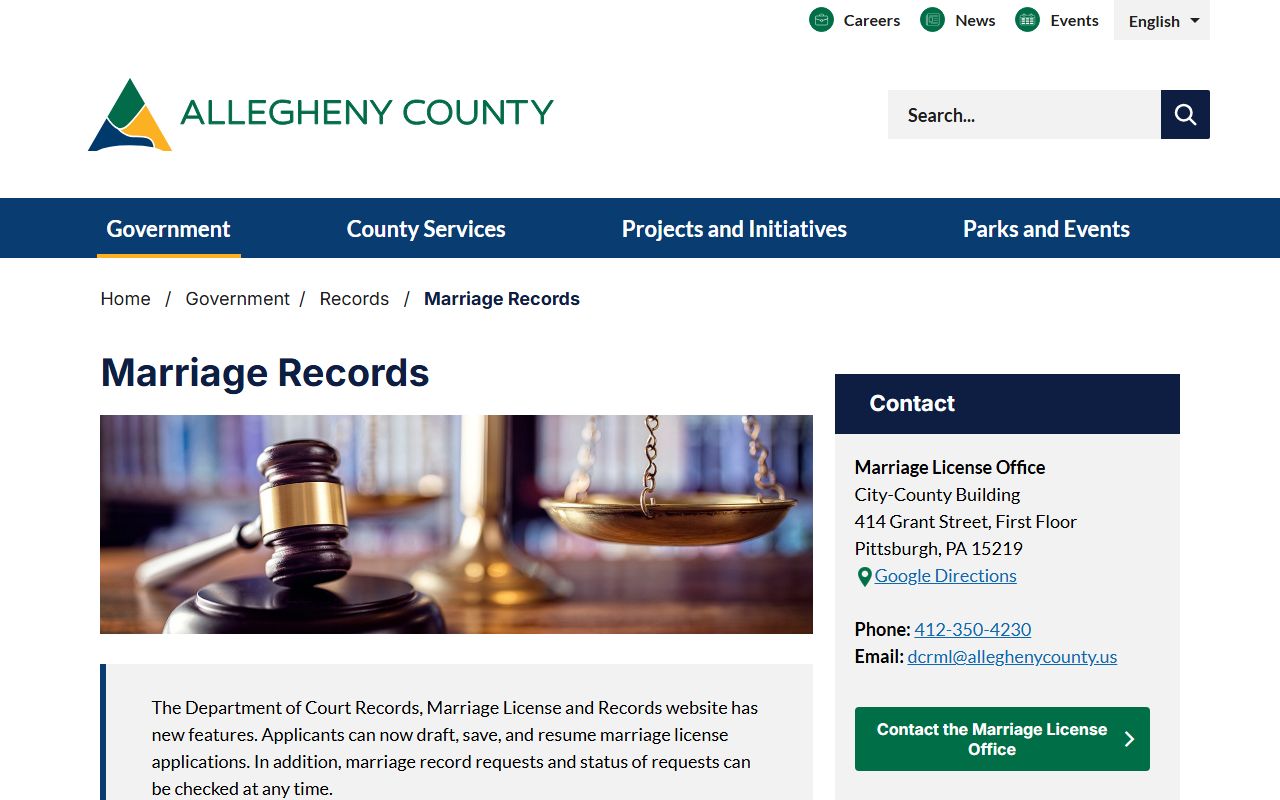
That page is the key local source for marriage record coverage, copy types, office contact information, and request requirements.
Divorce records are family-division court records handled through the Civil/Family Division. Orphans' Court and the Wills/Orphans' Court Division handle probate, wills, estate letters, guardianship, trusts, adoptions, and related case documents. Adoption records are confidential, while estate filings are more public unless sealed. Use the dedicated marriage and divorce records and Orphans' Court pages for the full access steps.
Allegheny County Court Fees
Allegheny County fees vary by division and filing type. The DCR research notes a civil and family records-retention fee increase from $3.50 to $7.00 effective June 1, 2026 under Administrative Order AD-26-000097-PJ. The criminal fee schedule lists a $232 petition for expungement, a $20 Post-Conviction Relief Act petition, and a $50 bail-bond posting fee, including real-property bonds. Marriage license work uses a separate fee schedule, and Wills/Orphans' Court has its own payment rules.
| Item | Amount or rule |
|---|---|
| Civil/family records retention fee | $7.00 effective June 1, 2026 |
| Criminal expungement petition | $232.00 |
| PCRA petition | $20.00 |
| Bail-bond posting | $50.00 |
| Marriage license | $90.00, plus $10.00 per divorce decree when applicable |
| NSF checks for civil/family or Wills/Orphans | $35.00, with no personal checks accepted |
Note: Fee pages change more often than docket access rules, so confirm the current amount with the division before filing.
Allegheny County Record Updates
Several local changes affect court-record access. Attorney civil e-filing became mandatory in Allegheny County on November 13, 2023, and DCR also made dual-factor authentication mandatory for attorneys. The research notes that verified-email case participants will receive Rule 236 notices electronically beginning July 1, 2026. These updates matter because docket activity, notice methods, and copy workflows are not static.
The official division phone directory is published by Allegheny Courts division phone numbers.
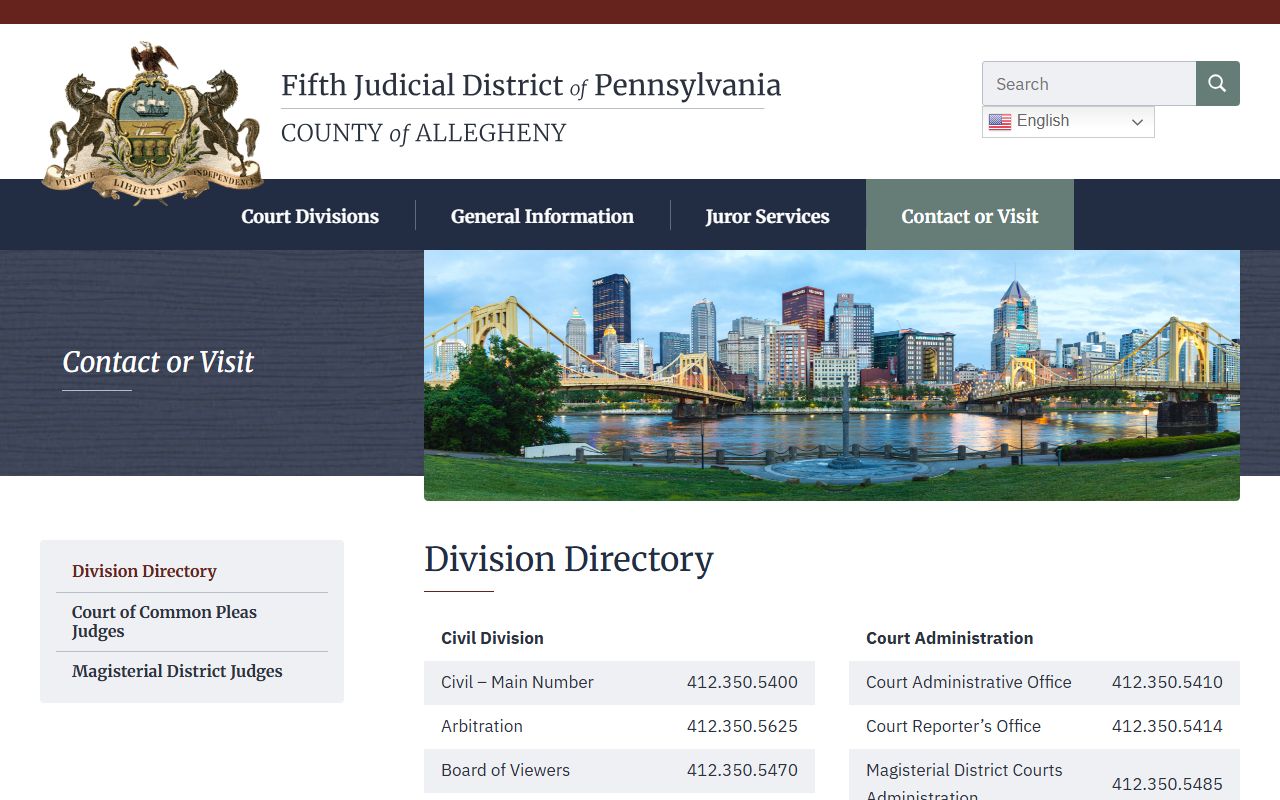
That directory is a practical fallback when a record type belongs to a court division rather than a searchable public database.
Allegheny County Court History
Allegheny County was created in 1788, and Pittsburgh is the county seat. The current courthouse is a major Richardsonian Romanesque public building and a National Historic Landmark. County materials credit Henry Hobson Richardson and describe the building's central courtyard, fountain, landscaped gardens, granite Grand Staircase, arches, columns, 326-foot bell tower, rooflines, smaller towers, and turrets. The old jail complex designed with the courthouse has been repurposed for family-court uses.
The courthouse's architecture is shown on the county courthouse venue page.
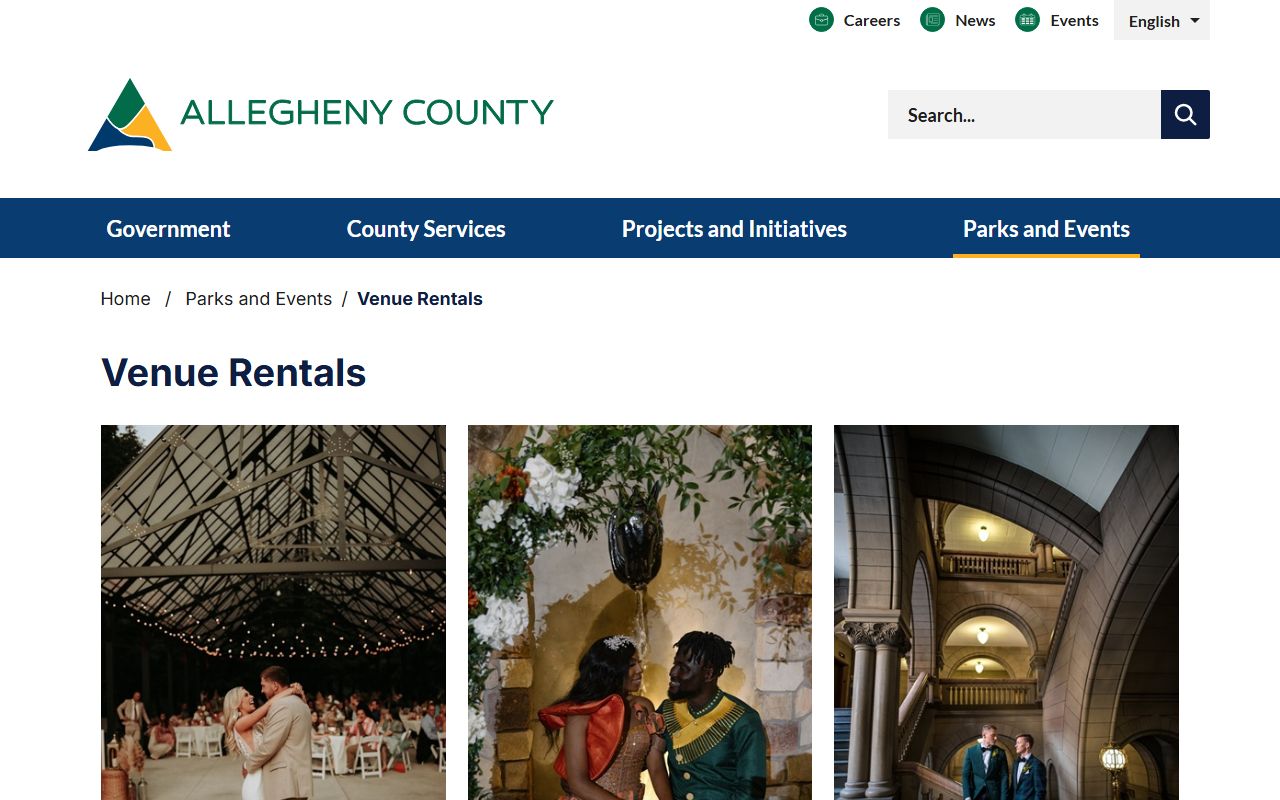
The historic setting matters for visitors because many record offices remain clustered in the downtown Grant Street court campus.
Allegheny County Court Records FAQ
Are Allegheny County Court records public?
Many Common Pleas case files are public unless sealed by court order, and UJS docket sheets are a free public service. Access is still limited for juvenile matters, adoption records, sealed cases, expunged records, mental-health matters, and confidential details protected by the UJS Case Records Public Access Policy.
Where should a court-record request go?
Common Pleas case-file requests should go to the proper court custodian or Department of Court Records division, not the ordinary county RTK form. Non-court county records use the county Open Records Office channels.
Does Allegheny County have one clerk of court?
No. Civil and family filings are handled by the Civil/Family Division, which performs Prothonotary functions. Criminal files are handled by the Criminal Division. Probate and Orphans' Court matters are handled by the Wills/Orphans' Court Division.
Can warrant information be checked by phone?
The Sheriff's public warrant notice says warrant information is not given by phone. The public fugitive search is not a full warrant-clearance system, and people who believe they have a warrant are directed to appear in person.