
Allegheny County Court Docket Basics
A docket is the court's running index for a case. In Allegheny County, a docket can identify the court, docket number, caption, filing date, parties, attorneys, judge, case status, scheduled proceedings, orders, dispositions, and financial obligations. Criminal dockets may also show an OTN, complaint number, arresting agency, charges, statute, grade, plea, sentence, probation, restitution, and costs. Civil and family dockets can show motions, judgments, conferences, and orders, though family details may be limited.
Dockets are not the same as complete case records. The docket sheet tells what happened and when it happened. The full file may contain pleadings, exhibits, written orders, returns of service, motions, and certified copies held by the Department of Court Records or the issuing lower court. That distinction matters in Allegheny County because UJS provides free docket sheets, while DCR and court offices remain the source for full files and copy requests.
The manifest image from UJS Case Search shows the statewide route used for many Allegheny County court docket searches.
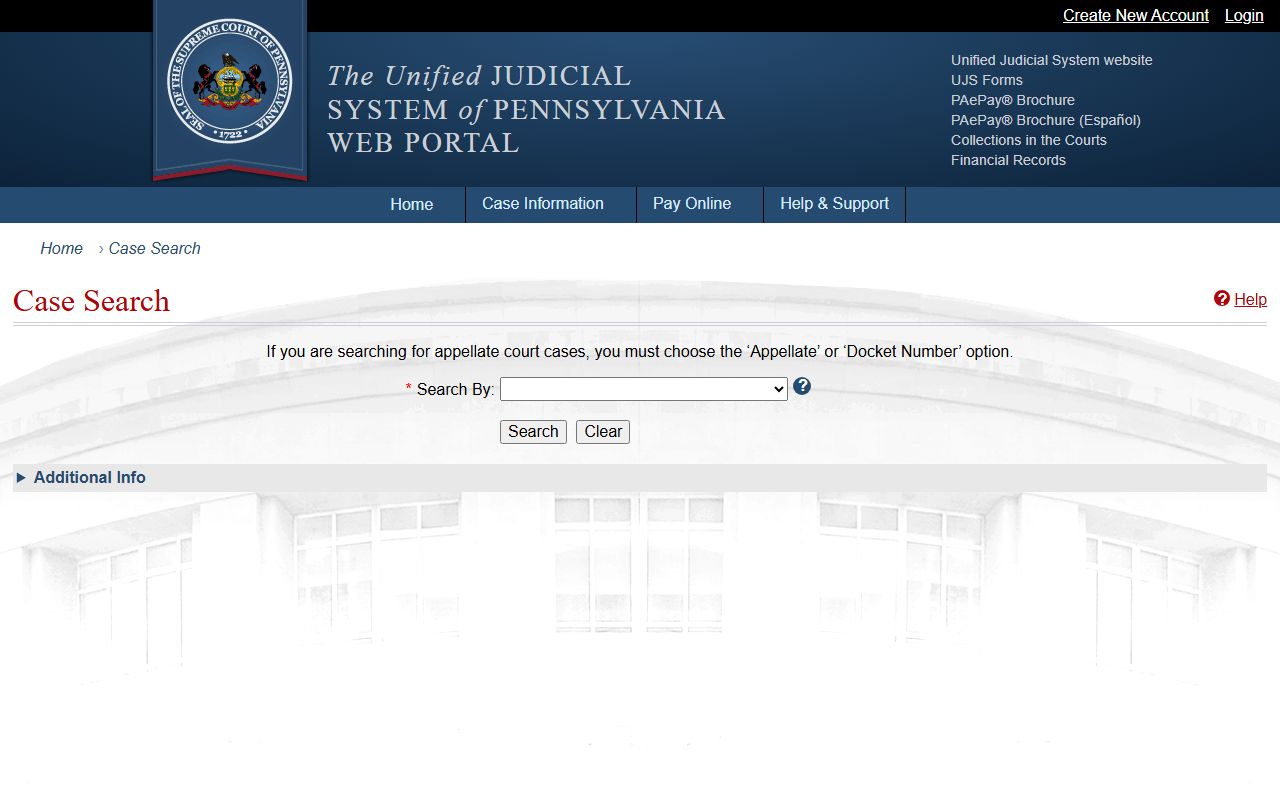
UJS is the best first stop when the court level is not yet clear or a lower-court docket may exist.
How to Find Allegheny County Dockets
Most public Allegheny County court dockets can be searched through Pennsylvania UJS Case Search. The portal covers Common Pleas docket sheets and Magisterial District Court cases, including many traffic and summary matters. The UJS portal also points users to PAeDocket, which supports searches by case number, participant name, organization name, OTN, police incident or complaint number, or state ID number.
- Open UJS Case Search and choose a search path based on the information available.
- Enter a case number, participant name, organization name, OTN, complaint number, or state ID number.
- Use county, court type, and date details to avoid matching the wrong person or business.
- Open the docket sheet and review the caption, court, status, event entries, and scheduled proceedings.
- Contact the proper DCR division or lower court if a full document, certified copy, or older file is needed.
For civil and family matters, the Allegheny County DCR Civil/Family Case Search can help when a Standard Case ID or Non Standard Case ID is known. Criminal files are handled by the DCR Criminal Division. Current-year and four prior years files are kept in Room 220 of the Allegheny County Courthouse, while older files must be ordered from storage.
Allegheny County Docket Entries
A docket entry is usually a single line in the case timeline. It can record a filing, hearing, order, continuance, payment, disposition, or sentence. In criminal and traffic matters, an entry may carry legal weight because it can show a plea, conviction, dismissal, bench warrant, or financial obligation. In civil and family matters, it can mark service, motions, arbitration events, conferences, or orders. Always read the entry in context with the court, date, and case status.
| Field | What It Shows |
|---|---|
| Docket Number | The case identifier used by UJS, Common Pleas, MDJ, or Pittsburgh Municipal Court. |
| Entry Date | The date the filing, order, hearing, payment, or case event was docketed. |
| Event Type | The type of event, such as motion, hearing, order, plea, disposition, sentence, or payment. |
| Party or Attorney | The person, office, or lawyer connected to a filing when that data is entered. |
| Case Status | Whether the case is active, closed, disposed, awaiting hearing, or otherwise marked by the court. |
| Financial Detail | Fines, costs, restitution, balances, or PAePay eligibility where applicable. |
The manifest image from the Pennsylvania courts overview supplies the statewide context behind Allegheny County docket routing.
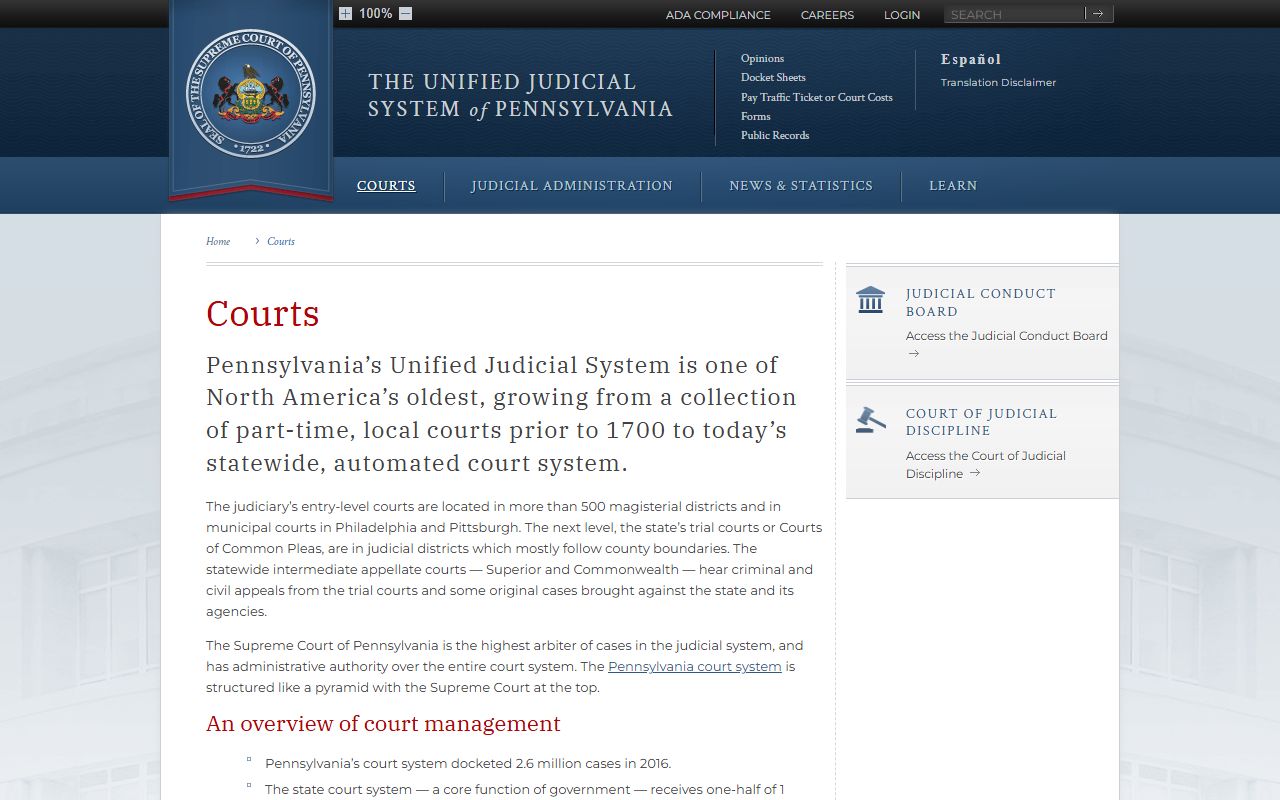
That hierarchy explains why a docket may appear under Common Pleas, Magisterial District Court, or an appellate court depending on case stage.
Courts Publishing Allegheny County Dockets
Allegheny County is Pennsylvania's Fifth Judicial District. The Court of Common Pleas has Civil, Criminal, Family, and Orphans' Court divisions and is the trial court for major civil and criminal matters. Magisterial District Courts handle preliminary arraignments and hearings, summary offenses, many traffic cases, landlord-tenant matters, and smaller civil disputes. Pittsburgh Municipal Court handles city lower-court matters and has arraignment and emergency protection functions.
- Court of Common Pleas dockets cover major civil, criminal, family, and Orphans' Court matters.
- Magisterial District Court dockets cover many traffic, summary, landlord-tenant, small civil, and preliminary criminal matters.
- Pittsburgh Municipal Court dockets cover city lower-court cases and related arraignment functions.
- Appellate dockets may appear when a Common Pleas judgment is appealed to Superior Court or Commonwealth Court.
The manifest includes the state trial-court explanation from the Courts of Common Pleas overview.
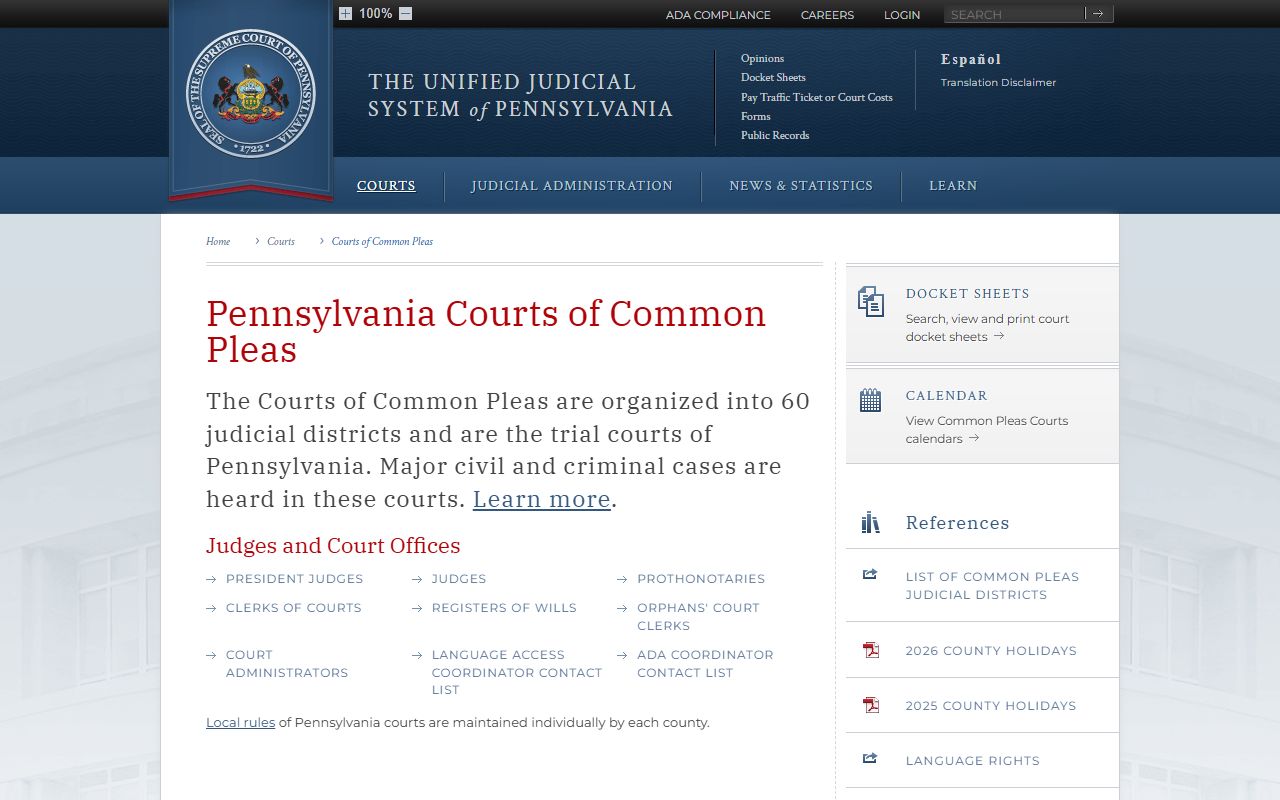
Allegheny County's Common Pleas dockets sit inside that statewide trial-court framework.
Allegheny County Dockets vs Files
The docket is the public index. The file is the set of documents behind the index. A UJS docket may be enough to confirm a hearing date, charge status, judgment, disposition, or payment balance. It may not be enough for litigation, title work, certified proof, expungement review, or a detailed family matter. Those needs often require a DCR copy request, an in-person terminal, or contact with the issuing court.
| Docket Sheet | Full Case Record | |
|---|---|---|
| Format | Chronological case entries and summary fields. | Pleadings, orders, motions, exhibits, returns, and certified copies. |
| Main Online Source | UJS Case Search and PAeDocket. | DCR retrieval, court office request, or in-person inspection. |
| Best Use | Track case progress, identify court, verify dates, read dispositions. | Legal review, certified proof, detailed filings, or stored-file research. |
| Limits | May omit documents or confidential details. | May require fees, storage retrieval, or restricted-access review. |
A traffic citation, a criminal complaint, and a family order can each have a docket entry, but the full underlying documents may sit in different offices. For full civil and family files, the Prothonotary functions are performed by the DCR Civil/Family Division. For criminal files, the local custodian is the DCR Criminal Division, also reflected through the separate Clerk of Courts function.
Access Rules for Allegheny County Dockets
Public docket access is governed by court policy, not just ordinary county open-records rules. The UJS public-records policy page and the Case Records Public Access Policy define case records and confidential information. The Pennsylvania Right-to-Know Law governs many agency records, but court case records are requested from the custodian under court rules and policy.
Allegheny County's own court-record guidance says Court of Common Pleas case files are open unless sealed and that requesters should not use the Open Records Fill-In Form for those case files. For non-court county records, the general Open Records process can be used. That difference is crucial when a docket search turns into a request for file copies, financial records, or non-case county records.
Note: A public docket does not override a sealing order, expungement, juvenile restriction, or confidential-information rule.
The manifest image from the Pennsylvania Right-to-Know Law text represents the agency-record side of the access question.
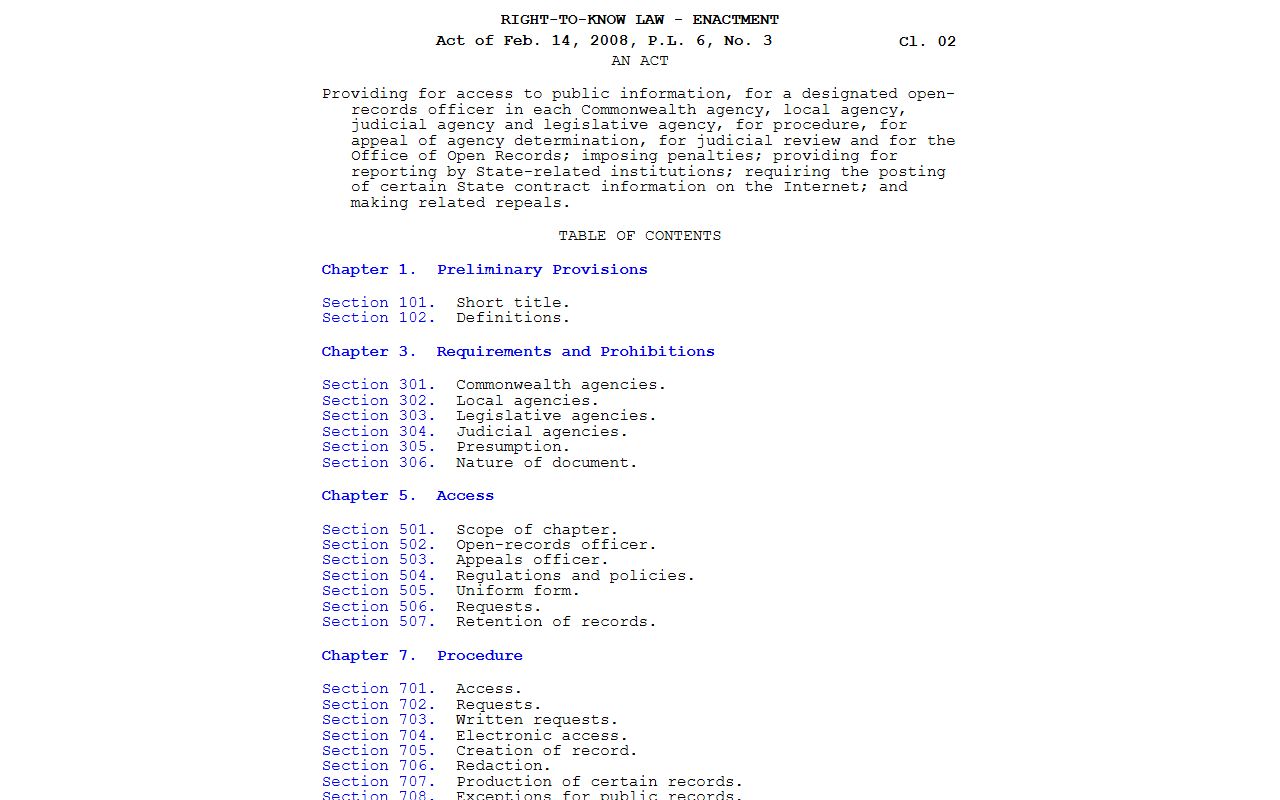
The RTKL source is relevant because readers often confuse court dockets with general county records requests.
The manifest also includes the Pennsylvania Office of Open Records RTKL guide.
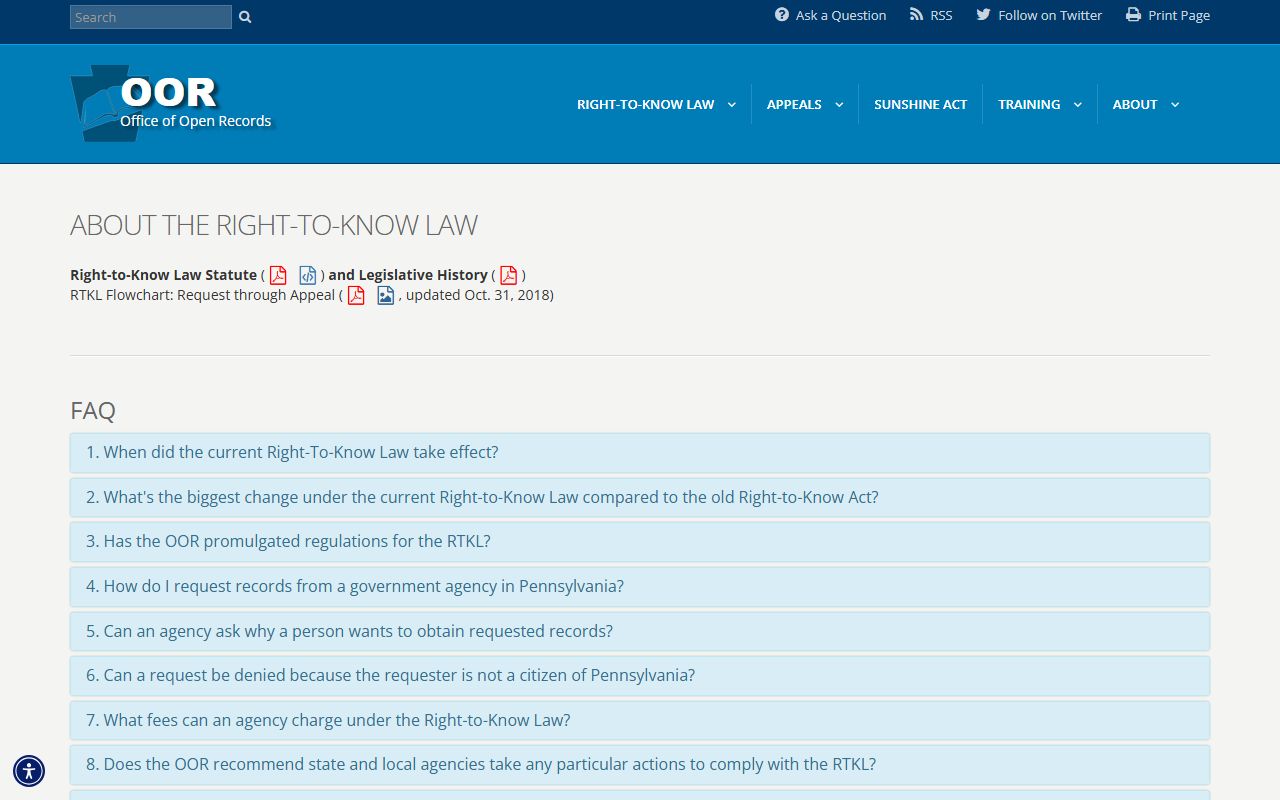
That guide helps separate agency-record requests from court-file requests that must go to the proper judicial custodian.
Read Allegheny County Docket Status
Start with the caption, court, and docket number. Then read the entries in date order. A filing entry may simply show that a document was received. A hearing entry may set or continue a court date. A disposition entry shows how a charge, claim, petition, or motion was resolved. A sentence entry in a criminal case is different from a charge entry because it follows a guilty plea, verdict, or other final outcome.
Common terms matter. A complaint starts a civil claim or states criminal allegations. A motion asks for a court order. An order is the judge's written directive. A disposition is the final outcome of a charge or case. A continuance moves an event to a new date. An OTN is the offense tracking number in many criminal matters. If the docket shows costs or restitution, check whether PAePay applies before assuming online payment is available.